What Are the Menopause Symptoms Women Miss Most?
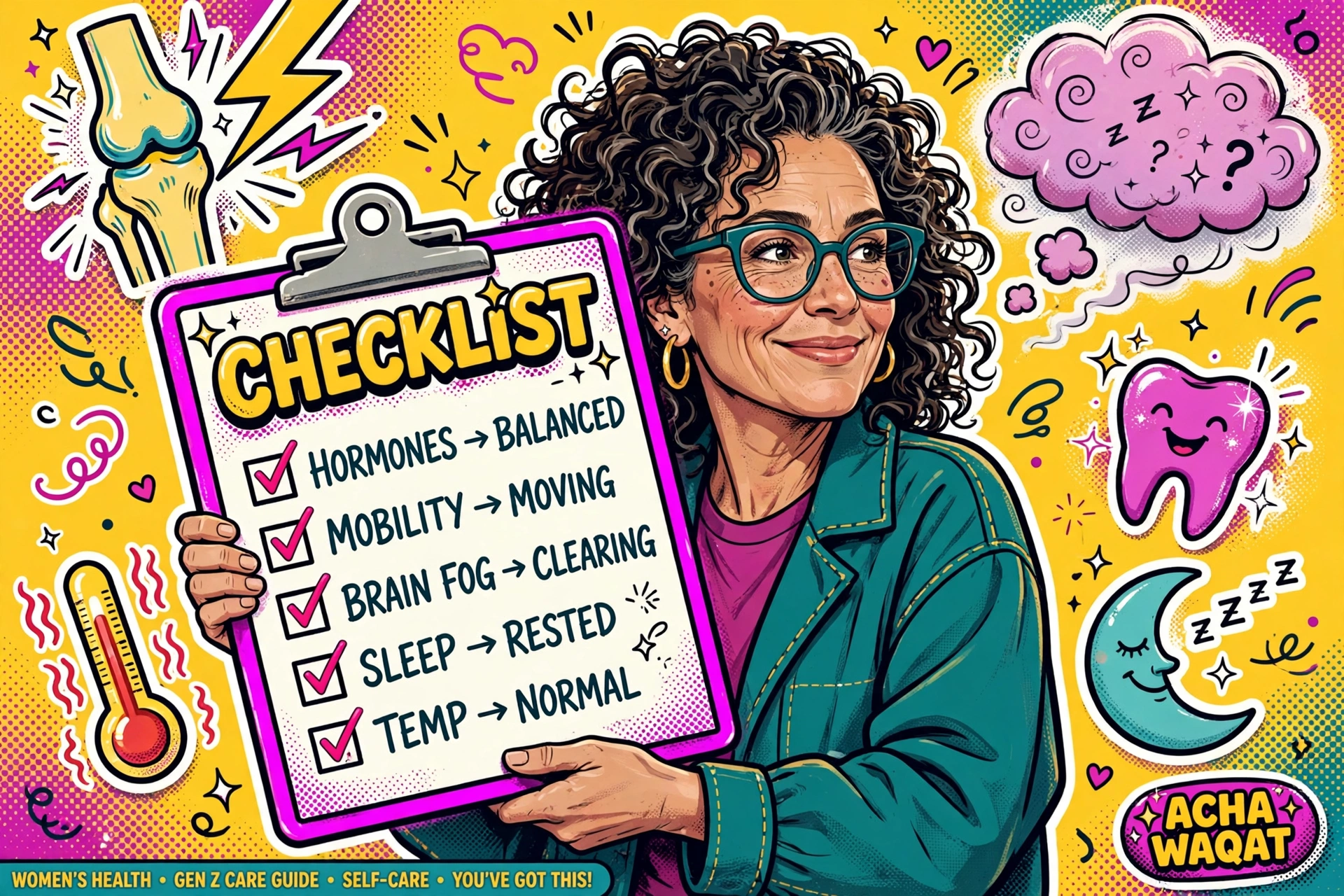
This menopause symptoms checklist gathers the signs women miss most, verified against NHS and NICE guidance, ahead of World Menopause Day on 18 October 2026. Most women know about hot flushes and irregular periods. Far fewer realise that aching joints, brain fog, palpitations, sensitive teeth and recurring urinary infections can all belong on the same list.
The International Menopause Society has chosen Chronic Pain at Midlife as the theme for World Menopause Day 2026, precisely because pain is one of the symptoms most often dismissed or blamed on something else. Writing ahead of the day, menopause writer Erin Beattie summarised a 2026 Science magazine review by Laura Gravelsins and colleagues, which reframed menopause as a whole-body transition and counted as many as 72 reported symptoms, with women experiencing an average of seven at a time. No wonder so many slip through the cracks.
Menopause in plain English: the definition behind the checklist
Menopause is the point when a woman has not had a period for 12 months, marking the end of natural fertility. No medical test is needed to confirm it in most cases; it is a clinical diagnosis. The average age in the UK is 51, with a normal range of 45 to 57, and around 1 in 100 women reach menopause before the age of 40, known as premature ovarian insufficiency.
The years of symptoms leading up to it are called perimenopause. NHS 111 Wales notes that about 8 in every 10 women will have additional symptoms for some time before and after their periods stop, while Cambridge University Hospitals notes that up to 80 to 90 percent of women experience some symptoms, with a quarter describing them as severe and debilitating. Symptoms can fluctuate and last for months or years.
Why do so many menopause symptoms get missed?
Three reasons come up again and again. First, the famous symptoms (hot flushes, night sweats, irregular periods) dominate every conversation, so anything else feels unrelated. Second, many of the missed symptoms overlap with ordinary midlife: who would connect a sore knee or a fuzzy memory to hormones? Third, women are routinely told these things are just ageing, tiredness or stress, and they believe it. The 2026 World Menopause Day campaign exists to challenge exactly that reflex, starting with pain.
Do joint aches and pain count as menopause symptoms?
Yes, and this is the symptom the International Menopause Society most wants recognised this year. Joint stiffness, aches and pains and muscle aches are listed as menopause symptoms across NHS guidance, and the 2024 update to NICE Guideline NG23 on menopause diagnosis and management lists musculoskeletal symptoms, such as joint and muscle pain, among the core symptom groups.
Press coverage ahead of World Menopause Day 2026 cited a review of more than 93,000 women in which 57 percent of perimenopausal women reported muscle or joint pain. The wider context matters too: the Health Survey for England 2024 found that 26 percent of adults experience chronic pain, with women more likely than men to report it (29 percent versus 22 percent), and high-impact chronic pain that interferes with everyday life or work on most days affected 15 percent of women compared with 11 percent of men. Those figures describe the general adult population, not menopause specifically, but they show how much pain already sits in the background for women at midlife.
The practical point is simple: new, persistent or worsening aches at midlife deserve proper assessment, not an automatic assumption that they are just wear and tear. Falling oestrogen can affect joints, muscles, tendons and even how pain signals are processed, but arthritis and other conditions also become more common at this age, so a clinician should sort one from the other.
What does menopause brain fog actually feel like?
Problems with memory and concentration, widely called brain fog, are one of the most commonly missed cognitive symptoms. Women describe walking into a room and forgetting why, losing words mid-sentence, or finding it harder to hold several threads of thought at once. NHS trust guidance lists problems with memory and concentration alongside mood changes as standard menopause symptoms.
Brain fog is easy to misread as early dementia, burnout or simply being too busy, which is why it causes so much quiet anxiety. The reassuring part is that it is recognised, common and listed in formal guidance. The useful part is that it belongs on the checklist: if it arrives alongside other entries here, menopause is a reasonable explanation to discuss with a GP.
Can menopause cause anxiety, low mood and irritability?
Yes. Mood changes, including low mood, anxiety and irritability, are core menopause symptoms in NHS guidance, and the NICE-aligned formulary guidance groups depressive symptoms with the vasomotor and musculoskeletal effects of menopause. Low self-esteem is also frequently listed.
This is another heavily missed group, because midlife is full of plausible alternative explanations: teenagers, ageing parents, work pressure, poor sleep. All of those can be real and still coexist with a hormonal contribution. The pattern to notice is timing. If low mood, anxiety or a shorter fuse arrive or worsen in the same window as sleep disruption, flushes or cycle changes, say so explicitly when you speak to a clinician, because that pattern is diagnostically useful.
Why does menopause cause palpitations and worse headaches?
Palpitations, when heartbeats suddenly become more noticeable, are a listed menopause symptom, as are headaches and migraines that are worse than usual. Both are startling enough to send women to urgent care, and both are frequently investigated as heart or neurological problems before anyone asks about the menopause.
That investigation is appropriate: new palpitations and new or changed headaches should be checked, because they can have other causes. But they also belong on the checklist. If cardiac tests come back clear and the timing fits the menopause transition, the two facts together point somewhere useful.
Which bladder and vaginal symptoms are linked to menopause?
Falling oestrogen thins and dries the tissues of the vagina, vulva and urinary tract, and the symptom list that follows is long: vaginal dryness, soreness, pain, itching or discomfort during sex, reduced sex drive, bladder issues, and recurrent urinary tract infections. NHS 111 Wales lists recurrent UTIs among common menopausal symptoms, and Cambridge guidance adds vaginal dryness with pain, itching or discomfort during sex.
These are among the most under-reported symptoms of all, partly from embarrassment and partly because women assume UTIs or dryness are separate, unrelated problems. They are also among the most treatable: vaginal oestrogen, moisturisers and lubricants, and proper assessment of recurrent infections all exist, and none of them require suffering in silence first.
Can menopause change your skin, hair and teeth?
Skin changes, including dry and itchy skin, and changes in hair are listed across NHS menopause guidance. Less well known is the mouth: Cambridge University Hospitals lists sensitive teeth, painful gums and other mouth problems as menopause symptoms.
Dental sensitivity that appears out of nowhere, gums that bleed more easily, skin that suddenly feels papery, hair that sheds more than it used to: each of these is easy to file under ageing or stress. They sit more honestly on the menopause checklist, especially when they arrive as part of a cluster.
Why am I so tired? Sleep, weight and muscle changes at menopause
Difficulty sleeping is one of the most common menopause symptoms, and night sweats are only part of the story; many women simply sleep more lightly or wake more often. The daytime result is the tiredness and irritability that NHS leaflets list as standard.
Body changes complete the picture. NHS guidance lists changed body shape and weight gain, and reduced muscle mass, as menopause symptoms. Oestrogen influences where fat is stored and how muscle is maintained, so the shift of weight toward the waist and the sense of losing strength are physiological, not failures of willpower. Regular weight-bearing exercise and enough protein help, and persistent, unexplained weight change still deserves a GP visit.
How is the menopause diagnosed?
For most women over 45, the diagnosis is made from symptoms and cycle history alone: 12 months without a period confirms menopause, and no blood test is needed. That surprises many women, who arrive expecting a hormone panel. Testing is generally reserved for younger women, where early menopause or premature ovarian insufficiency is suspected, or where the picture is unclear. If you are under 45 with irregular or absent periods and symptoms from this checklist, ask your GP about assessment rather than assuming it cannot be menopause yet.
When should you see your GP about menopause symptoms?
See your GP if symptoms are troublesome, because treatments exist, from hormone replacement therapy to non-hormonal medicines and practical measures for specific symptoms. NICE guidance updated in 2024 sets out the diagnosis and management options your clinician should discuss with you.
Seek prompt medical advice rather than waiting for a routine appointment if you notice bleeding after 12 months without periods, very heavy or prolonged bleeding, a new breast lump or nipple changes, chest pain, shortness of breath, fainting, or thoughts of harming yourself. New, severe or unexplained pain should be assessed on its own merits and not automatically filed under menopause, which is exactly the message of this year’s World Menopause Day theme.
Frequently asked questions
What is the first sign of perimenopause?
Often it is a change in periods: they may become irregular, heavier, lighter, closer together or further apart. But for many women the first noticeable sign is something from this checklist instead, such as poorer sleep, new anxiety, brain fog or aching joints, arriving while periods still look normal.
How long do menopause symptoms last?
It varies widely. NHS guidance notes that symptoms can fluctuate and last for months or years, with perimenopause often starting several years before the final period and some symptoms, such as vaginal dryness, persisting long after if untreated.
Are joint aches a symptom of menopause?
Yes. Joint stiffness, aches and pains and muscle aches are recognised menopause symptoms in NHS and NICE guidance, and chronic pain at midlife is the International Menopause Society’s theme for World Menopause Day 2026. New or worsening pain should still be assessed, because other conditions become more common at the same age.
Can menopause cause anxiety and brain fog?
Yes. Mood changes including anxiety, low mood and irritability, and problems with memory and concentration (brain fog), are listed as standard menopause symptoms across NHS trust guidance. If they arrive alongside sleep disruption or cycle changes, that timing is worth telling your GP about.
Do I need a blood test to confirm menopause?
Usually not. For women over 45, menopause is diagnosed from symptoms and the 12-months-without-a-period rule, with no test required. Blood tests are mainly used when early menopause is suspected under the age of 45 or the picture is unclear.
What actually helps menopause symptoms?
Options depend on the symptom and the person, and NICE guidance updated in 2024 covers them in full. Hormone replacement therapy helps many symptoms and protects bone; non-hormonal medicines can help flushes and mood; vaginal oestrogen, moisturisers and lubricants target dryness and discomfort; regular exercise, good sleep habits and a balanced diet support the rest. A GP or menopause specialist can tailor the mix.
Related reading: The Sleep Problem Linked to a 26% Higher Stroke Risk (why broken sleep matters beyond tiredness) | “Just Overweight” but at Heart-Attack Risk: The Two Blood Markers Your Doctor Should Check (midlife weight shifts and heart risk) | Who Can Get a Free NHS Flu Jab This Winter? (staying protected through the winter season)
Sources: NHS 111 Wales, Menopause (about 8 in 10 women have additional symptoms); Cambridge University Hospitals, Signs and symptoms (up to 80 to 90 percent have some symptoms; lists palpitations, headaches, mouth problems, recurrent UTIs); St George’s University Hospitals NHS Trust, Menopause leaflet (12-month rule; no tests needed); West Suffolk NHS Foundation Trust, What is the menopause? (average age 51, range 45 to 57; 1 in 100 before 40); Devon Formulary Guidance on the management of menopause (based on the 2024 update to NICE Guideline NG23); International Menopause Society via World Menopause Day 2026 coverage (18 October; 2026 theme Chronic Pain at Midlife; White Paper by ten international experts); Health Survey for England 2024 via Active Devon (chronic pain prevalence by sex); Erin Beattie, World Menopause Day 2026 roundup (2026 Science magazine review: up to 72 reported symptoms, average seven at a time); Female First, World Menopause Day 2026 (review of 93,000+ women: 57 percent of perimenopausal women reported muscle or joint pain).
