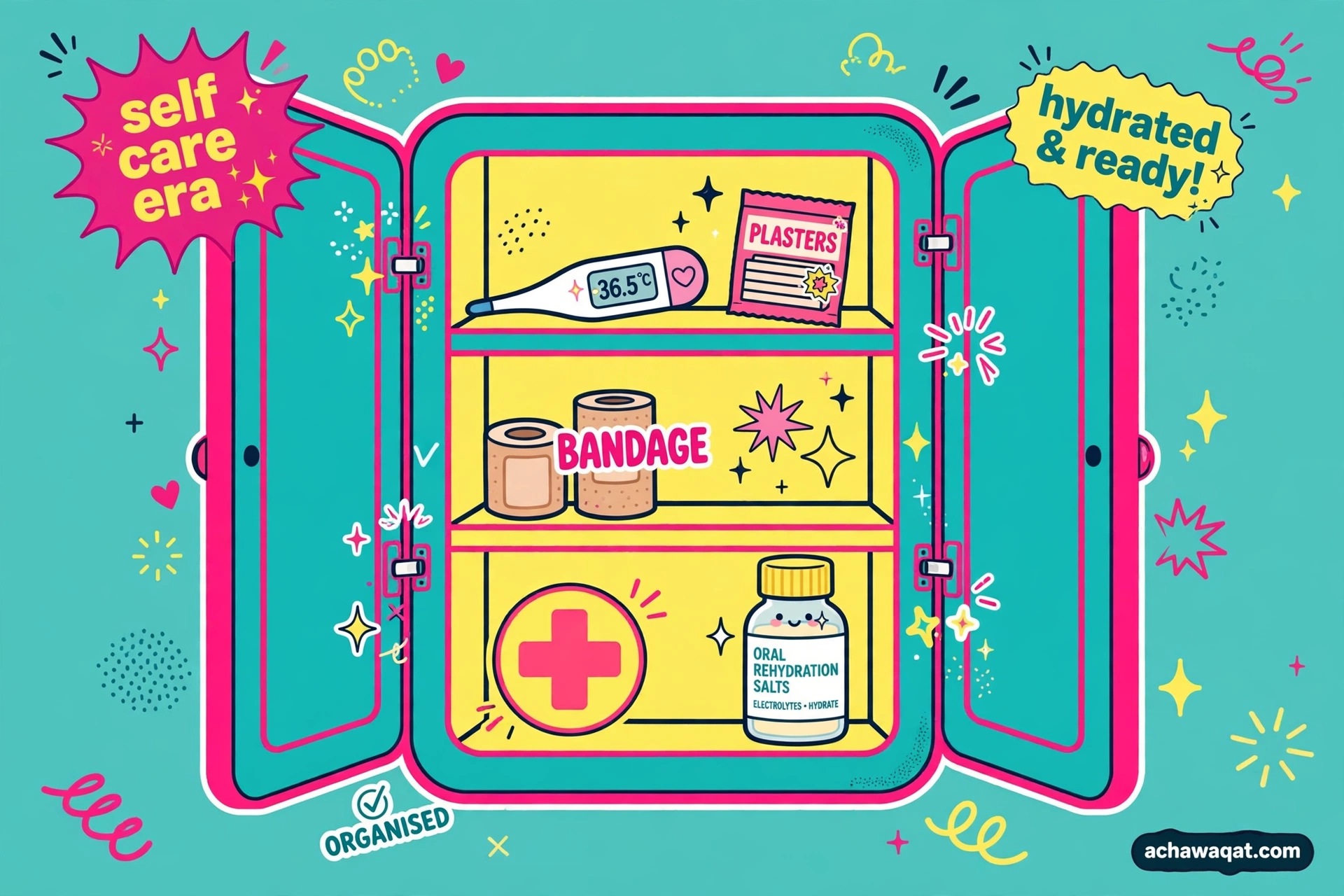
What should you keep in a home medicine cabinet? The NHS answer is short: your usual painkillers, cold and flu remedies, anti-diarrhoea medicine, oral rehydration salts, indigestion remedies, plasters, bandages, a thermometer and tissues. According to NHS England North West, filling a cabinet with these essentials can cost less than £10, and doing it before a school holiday saves a lot of stress later.
Half-term starts on Monday 26 October across England and Wales, running to Friday 30 October for most state schools (academies and free schools can set slightly different dates, so check your own school’s calendar). The NHS itself treats the run-up to a school holiday as the right moment for a medicine cabinet audit. NHS Lincolnshire Integrated Care Board even framed it as a shopping-list job: “Whilst you’re half-term shopping, stock up your medicine cabinet.” The logic is simple. Children fall ill in clusters during school breaks, GP surgeries have reduced hours, and nobody wants a midnight hunt for a thermometer with a feverish child on the sofa.
This is the NHS checklist, item by item, with what each one is for and the storage rules that matter most for families with small children.
Painkillers: paracetamol and ibuprofen
Your usual painkillers are the first thing the NHS lists, and for good reason. Paracetamol and ibuprofen cover aches, pains and high temperatures, which are the most common family complaints. NHS England North West lists both on its recommended cabinet list, alongside aspirin. One important boundary: aspirin should never be given to children, so for family cabinets, paracetamol and ibuprofen are the standard pair.
A few basics worth restating. Check the dose on the packet every time, because adult and children’s strengths differ. If a child is already taking prescribed medication, the NHS advises checking with your pharmacist first that any over-the-counter medicine is right for them. And never give paracetamol and ibuprofen at the same time; stagger them only if the first has not worked, following the instructions on the packaging.
Cold and flu remedies
October is the thick of coughs and colds, and the flu vaccination programme for winter 2026/27 has been running since 1 October for adult cohorts. Decongestants, cough mixtures and combination cold-and-flu products will not shorten a cold, but they can make a week of it more bearable, especially during a holiday week when you would rather not queue at a pharmacy with the whole family.
Worth knowing: the eligibility list for a free flu jab is wider than many people realise. Our guide to who can get a free NHS flu jab this winter walks through the full 2026/27 cohorts, including carers and close contacts of immunocompromised people who often miss out.
Oral rehydration salts and anti-diarrhoea medicine
Oral rehydration salts (ORS) are the item most people do not own and most wish they had during a stomach bug. The salts replace the lost minerals and fluid after a fever, vomiting or diarrhoea, which matters because dehydration, not the bug itself, is what sends people to urgent care. They are cheap, dissolve in water, and are suitable for the whole family when used as directed.
Anti-diarrhoea tablets relieve the symptoms of diarrhoea, although NHS England North West notes they will not help with the underlying cause. Keep both: the tablets for comfort, the salts for recovery. If the winter vomiting bug comes knocking, our norovirus explainer covers the 48-hour rule, why hand gel does not kill it, and when to phone 111.
Indigestion remedies
Half-term means irregular meals, holiday food, more takeaways and, in this household’s experience, children negotiating dessert with the confidence of trade delegates. Indigestion relief remedies settle heartburn and trapped wind. Antacids are the simplest option; if heartburn is frequent or new in someone middle-aged, that is a conversation for the GP rather than the cabinet.
First-aid supplies: plasters, bandages, antiseptic and more
A stocked first-aid corner is the non-negotiable part of the cabinet. NHS England North West recommends a first-aid kit including bandages, plasters, a thermometer, antiseptic, eyewash solution, sterile dressings, medical tape for dressings and tweezers.
With Bonfire Night two weeks away, burns deserve a special mention. The British Burn Association’s first-aid sequence is cool, call, cover: cool the burn under cool running water for at least 20 minutes, cover it lightly with cling film in layers (never wrap it around a limb), and never use ice, butter or creams. Our burn first-aid guide walks through exactly when a burn needs 111 versus 999. Cling film is not on the NHS cabinet list, but after reading that guide you may want a roll in the kitchen drawer.
The thermometer earns its own line. A digital thermometer takes the guesswork out of “does this feel hot?”; a fever is 38°C or above, and an accurate reading is what lets you decide whether to dose, whether to watch, and what to tell 111 if you call.
Antihistamines
Antihistamines help with allergies, and while the classic hay fever season is behind us, dust mites, mould from autumn damp, and pet allergies are year-round problems in British homes. One pack of the non-drowsy kind covers the family for itchy eyes and sneezing without the daytime grogginess older formulas caused.
The three storage rules that matter most
A medicine cabinet is only safe if it is stored properly. The NHS rules are three, and they are all easy to follow.
1. Keep medicines locked away from small children. This is the rule that prevents the most harm. A cabinet out of reach is not enough for a determined toddler; a locked box or a high, locked cupboard is what the NHS means by “safely stored”. Child-resistant caps are a backup, not a strategy.
2. Check the expiry dates before the holiday. Dig everything out today and check the use-by dates. If any medicines are past their date, do not take them. Expired medicines can lose potency, and some can become less predictable. When in doubt, replace rather than risk it.
3. Take old medicines back to the pharmacy. NHS Lincolnshire is explicit on this: do not throw medicines in the bin or flush them. Return them to your local pharmacy for safe disposal. The same trip that restocks the cabinet can clear out the expired half-empty boxes hiding at the back.
Repeat prescriptions: order at least a week ahead
If you or someone you care for takes medicines regularly, the week before a holiday is the time to check the supply. NHS England North West urges people to order and collect repeat prescriptions in good time, noting that ordering and collecting can take several days. The practical rule is at least a week in advance.
Two more holiday jobs: check your GP surgery’s opening times for the half-term week, and collect the prescription before the break rather than assuming same-day turnaround. If you have a smartphone, the NHS App is the quickest way to order a repeat without phoning the practice.
Your pharmacist is free, with no appointment
The part of the NHS campaign that deserves more attention: your local pharmacist can offer free health advice at any time, and no appointment is necessary. NHS Lincolnshire lists the range explicitly, from coughs and colds to aches and pains, plus expert help with everyday illnesses and answers about prescribed and over-the-counter medicines.
All year round, pharmacists can also advise on healthy eating, obesity and giving up smoking, and they have private areas where you can talk in confidence. If you are unsure which product suits a child, which remedy interacts with a regular medicine, or whether a symptom needs a GP at all, the pharmacy counter is the first stop, and it costs nothing.
When to get help rather than self-treat
A well-stocked cabinet handles the everyday. It does not replace advice when things are not improving. NHS England North West sets the boundary clearly: if your symptoms continue to get worse or have not improved after 72 hours, contact your GP practice. For urgent but not emergency situations, check your symptoms using 111 online.
So the Saturday job is this: pull everything out, bin the expired boxes for the pharmacy run, replace the missing basics, and order any repeats. Half-term starts Monday. The cabinet is ready, and the week can be about the break, not the bugs.
Frequently asked questions
What should I keep in a home medicine cabinet?
The NHS recommends painkillers (paracetamol and ibuprofen), cold and flu remedies, anti-diarrhoea medicine, oral rehydration salts, indigestion remedies, plasters, bandages, a thermometer and tissues. NHS England North West adds antiseptic, eyewash solution, sterile dressings, medical tape, tweezers and antihistamines to the list.
How much does it cost to fill a medicine cabinet?
According to NHS England North West, it can cost less than £10 to fill a cabinet with the recommended medicines. Products are available from community pharmacies, and supermarkets and budget retailers stock them too.
Where should I store medicines at home?
Keep medicines locked away from small children, in a high or locked cupboard rather than just out of sight. Store them in their original packaging with the patient information leaflet, away from heat and damp, and check the expiry dates regularly.
What should I do with expired medicines?
Do not take medicines that are past their use-by date, and do not throw them in the bin or flush them. Take them back to your local pharmacy, which will dispose of them safely.
Do children need different medicines in the cabinet?
Yes. Use children’s formulations of paracetamol and ibuprofen with the dose measured by weight and age, and never give aspirin to a child. If a child takes prescribed medication, check with your pharmacist before adding any over-the-counter product.
When should I order repeat prescriptions before a school holiday?
Order repeat prescriptions at least a week before the holiday, since ordering and collecting can take several days. Check your GP surgery’s opening times for the break and collect the prescription before it starts. The NHS App is the quickest route on a smartphone.
Sources
- NHS Lincolnshire Integrated Care Board, “Whilst you’re half-term shopping, stock up your medicine cabinet” (published 13 February 2026): lincolnshire.icb.nhs.uk
- NHS England North West, “Keeping you well, all year round”: england.nhs.uk
- UK School Holidays, “England School Holidays and Term Dates 2026 to 2027” (updated 9 September 2026): ukschoolholidays.co.uk
Related reading
- Who Can Get a Free NHS Flu Jab This Winter?
- The Winter Vomiting Bug Is Back: Norovirus, Explained Before It Finds You
- What to Do for a Burn at Home: The 20 Minutes That Decide How Well It Heals
Medical disclaimer: This article is for information only and is not medical advice. If you are worried about a symptom, speak to your pharmacist, GP or NHS 111.
